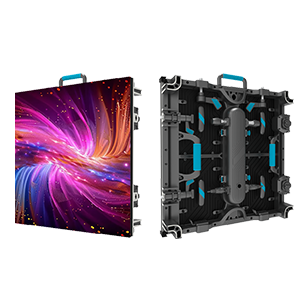
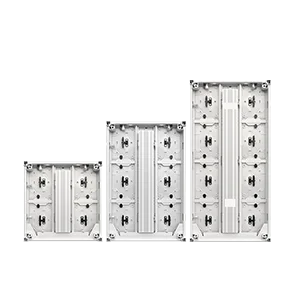
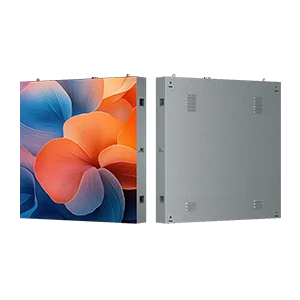
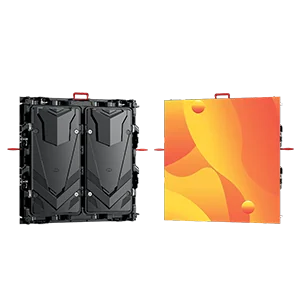
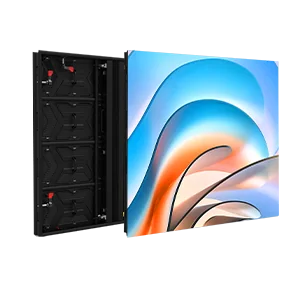
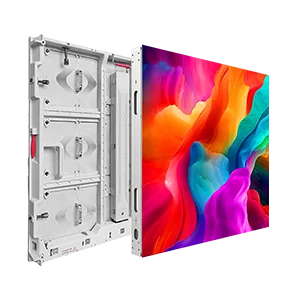
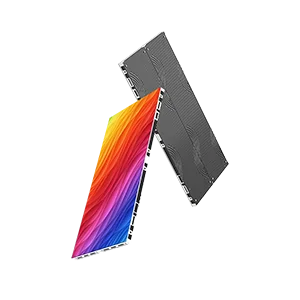
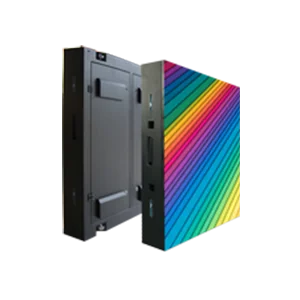
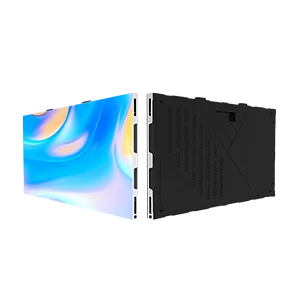
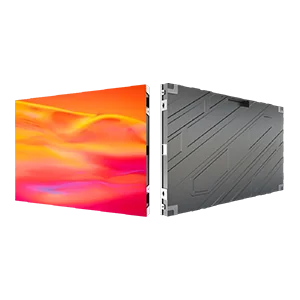
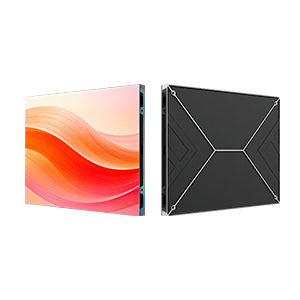
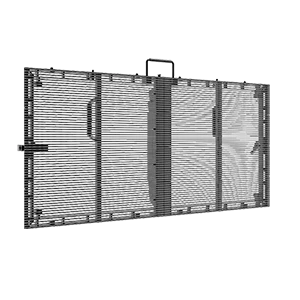
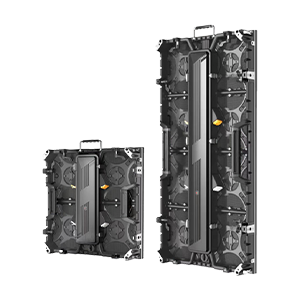
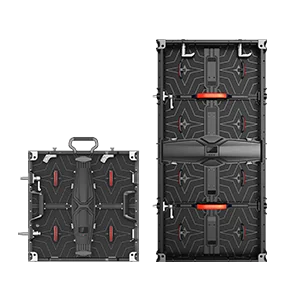
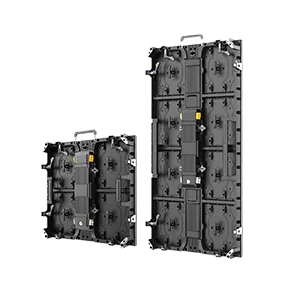
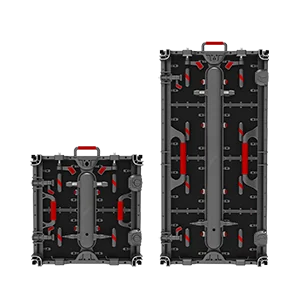





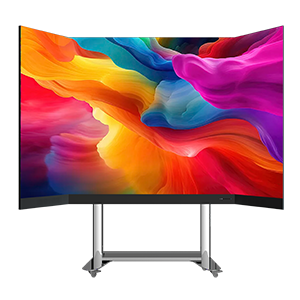
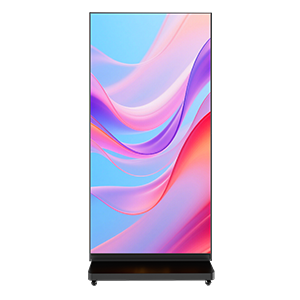
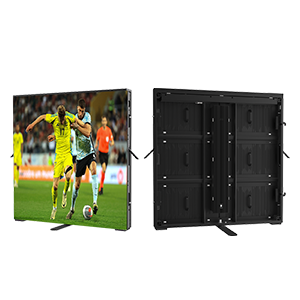
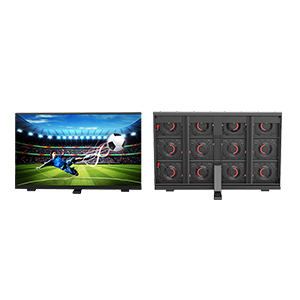
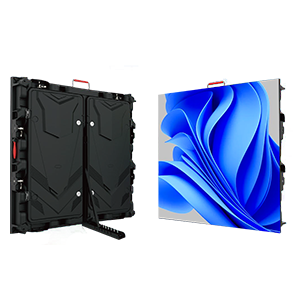
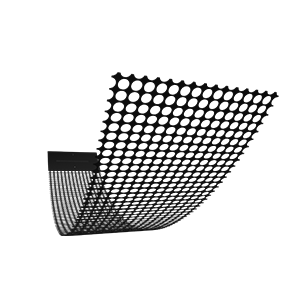
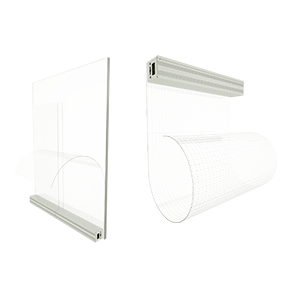
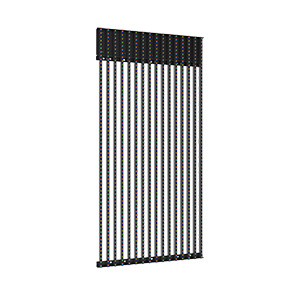
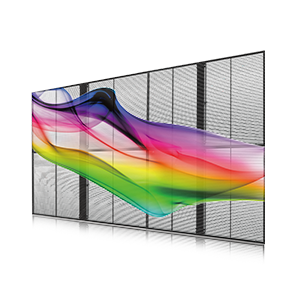
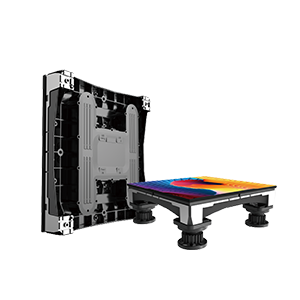
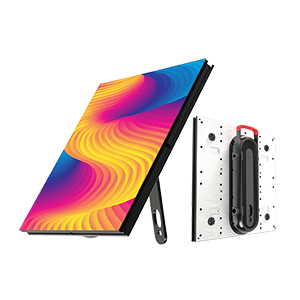
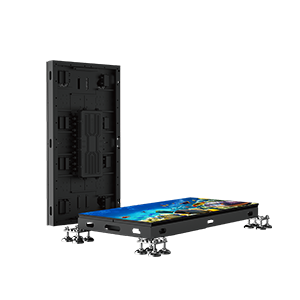
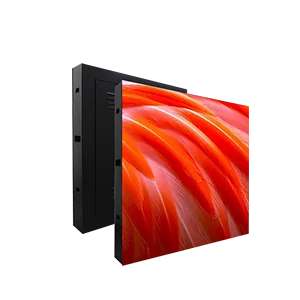
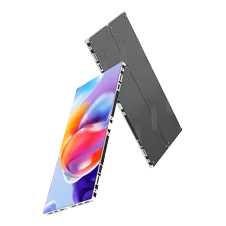
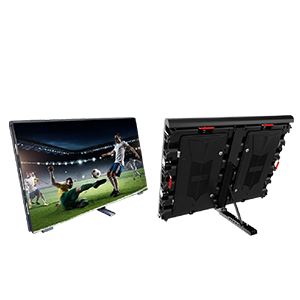
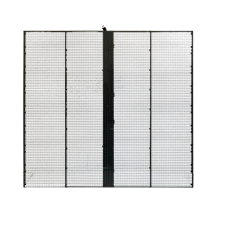
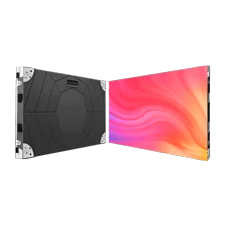
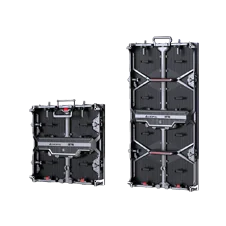
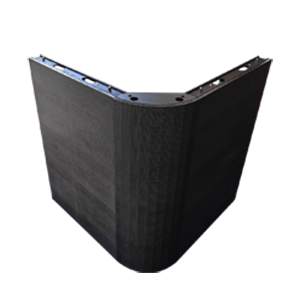
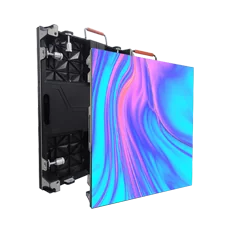
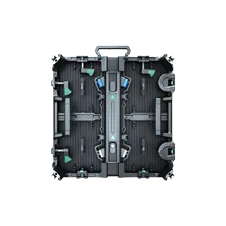
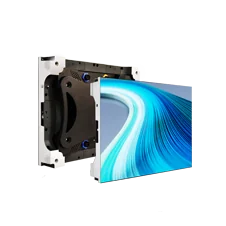
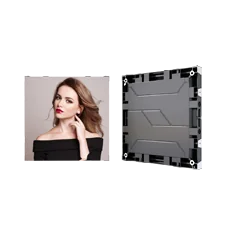
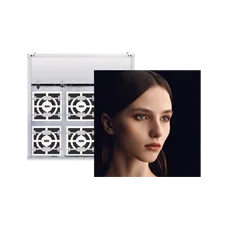






























Choosing a stadium LED screen? Learn about brightness, pixel pitch, refresh rate, IP rating, player safety, display types, cost factors and key buying considerations.
Sports venues need more than a large screen. A professional stadium LED screen must deliver clear images under changing lighting conditions, support live broadcasting, withstand outdoor environments, and provide reliable performance throughout sporting events.
At the same time, stadium operators increasingly use LED displays for more than scores and replays. They can display live camera feeds, player information, sponsor advertising, event announcements, and branded content.
This makes choosing the right stadium LED display a combination of technical, operational, and commercial decisions.
Before purchasing an LED screen for a stadium, venue operators should consider six key challenges: visibility, broadcasting, player safety, weather protection, viewing distance, and advertising revenue.
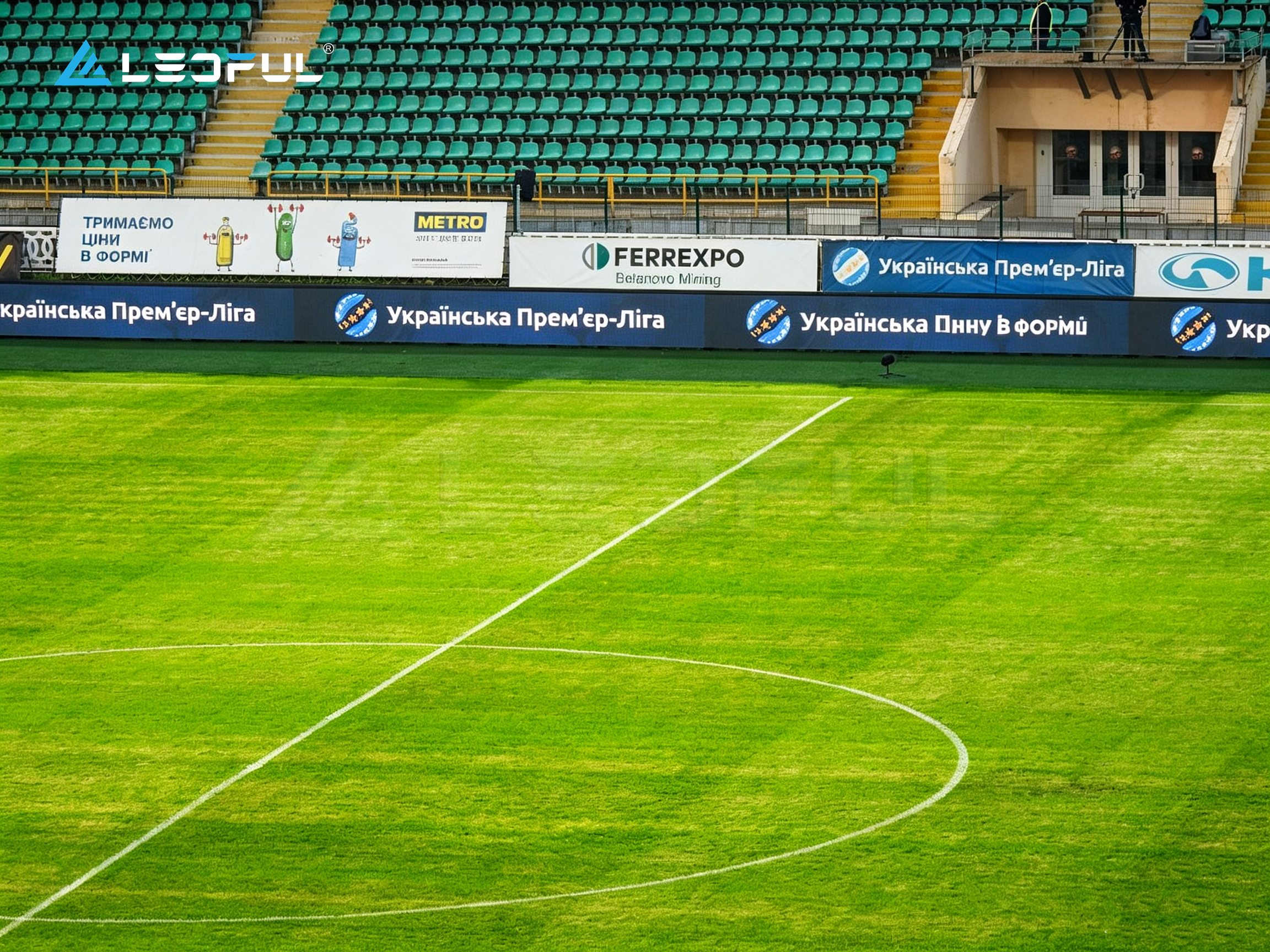
What Is a Stadium LED Display?
A stadium LED display is a large-format digital screen designed for sports venues, arenas, fields, and other large public spaces.
Unlike traditional scoreboards, modern LED displays can show dynamic video, live feeds, graphics, statistics, advertising, and real-time event information.
Common applications include:
- Football and soccer stadiums
- Basketball arenas
- Baseball stadiums
- Tennis venues
- Racing venues
- Swimming facilities
- Multi-purpose sports centers
- Large entertainment venues
Depending on the venue, an LED screen for stadium applications may be installed around the field, above the audience, on the exterior of the venue, or as a large central video wall.
6 Challenges Sports Venues Need to Solve
1. Can the Screen Stay Visible Under Bright Sunlight?
Outdoor stadiums face a major challenge that indoor displays do not: direct sunlight.
A screen that looks excellent indoors may appear too dim when installed outdoors.
For an outdoor stadium LED screen, brightness should therefore be selected according to:
- Direct sunlight exposure
- Screen orientation
- Viewing distance
- Installation height
- Local weather conditions
- Content requirements
High brightness helps maintain image visibility, while automatic brightness adjustment can help balance visibility and viewing comfort as ambient lighting changes.
The goal is not simply to choose the brightest screen.
The goal is to achieve clear images without unnecessary glare or excessive energy consumption.
2. Will the LED Screen Work Well for Live Broadcasting?
Sports events are increasingly watched through livestreaming, television, and social media.
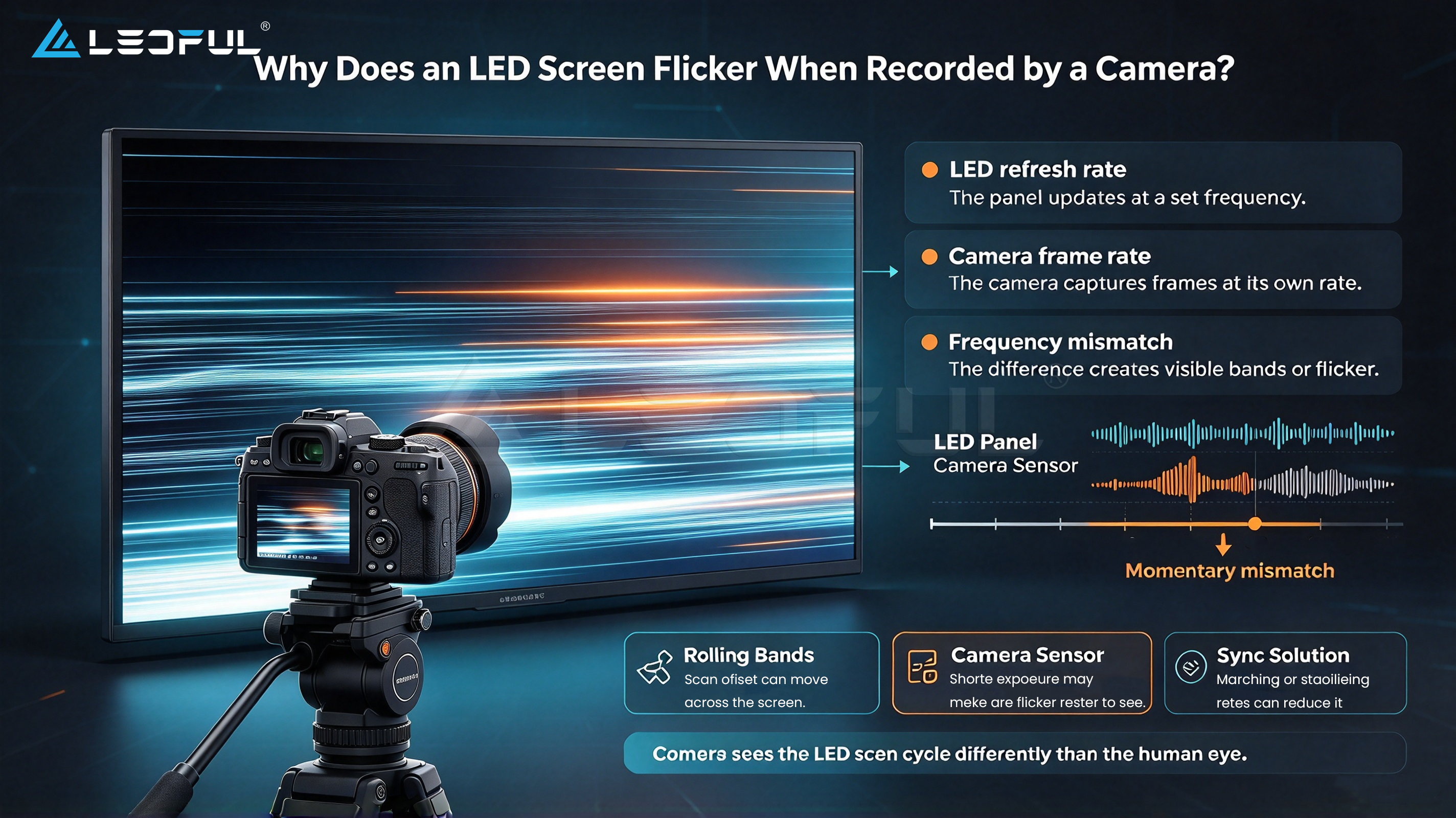
This means the LED screen may be viewed not only by people inside the stadium, but also by millions of people through cameras.
A screen with poor camera performance can produce:
- Flicker
- Scan lines
- Moiré patterns
- Uneven brightness
- Color inconsistencies
For this reason, stadium LED screen refresh rate is an important technical consideration.
Key Specifications for Broadcast Applications
For sports broadcasting, consider:
- High refresh rate
- High grayscale performance
- Stable brightness
- Accurate color reproduction
- Proper LED scan configuration
- Professional calibration
A high refresh rate, such as 3840Hz or above depending on the application, can provide smoother camera capture.
However, refresh rate alone does not guarantee broadcast quality. Camera settings, shutter speed, shooting distance, lens selection, pixel pitch, and LED configuration can also affect the final image.
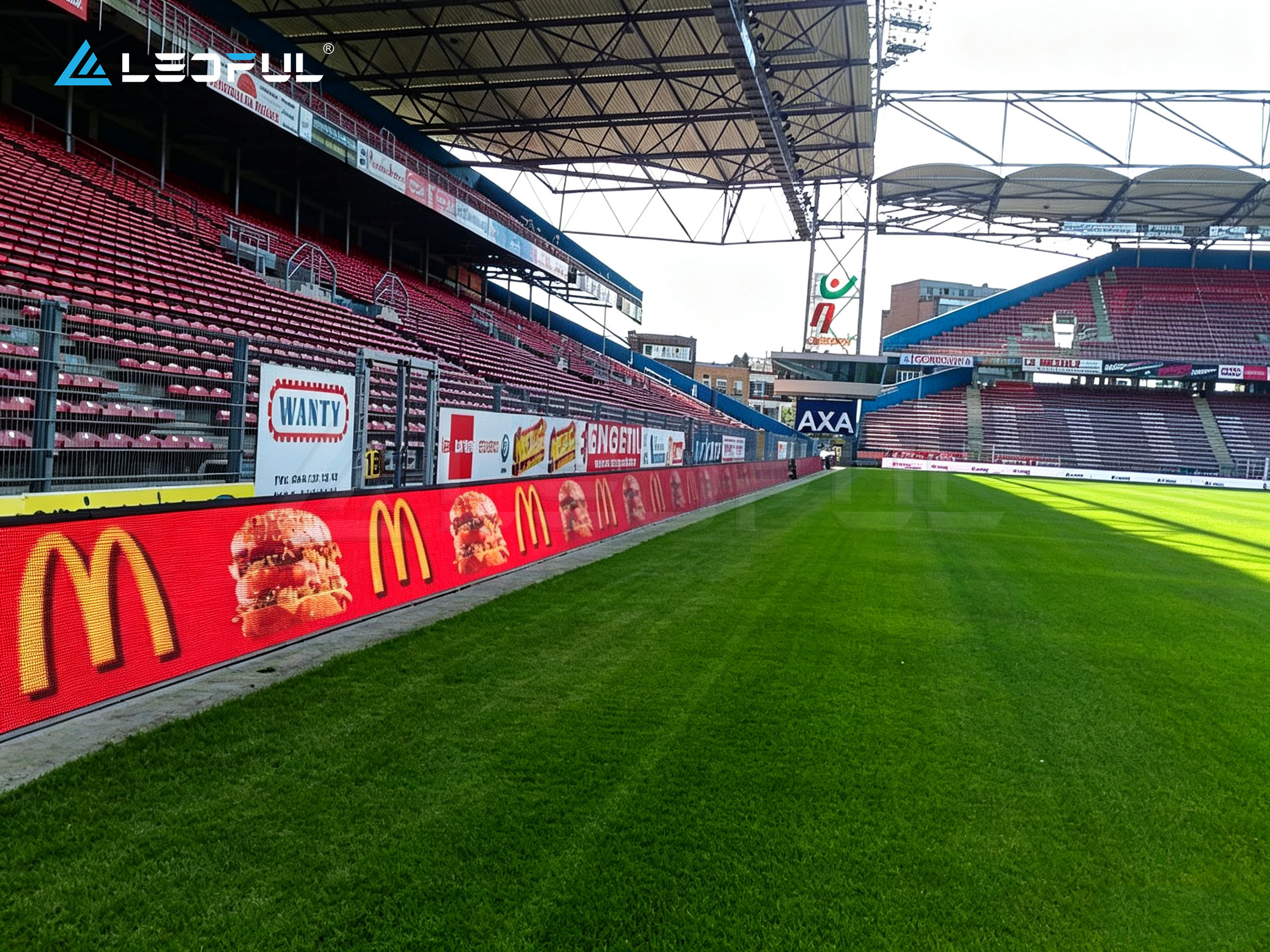
3. Can Perimeter LED Displays Protect Players?
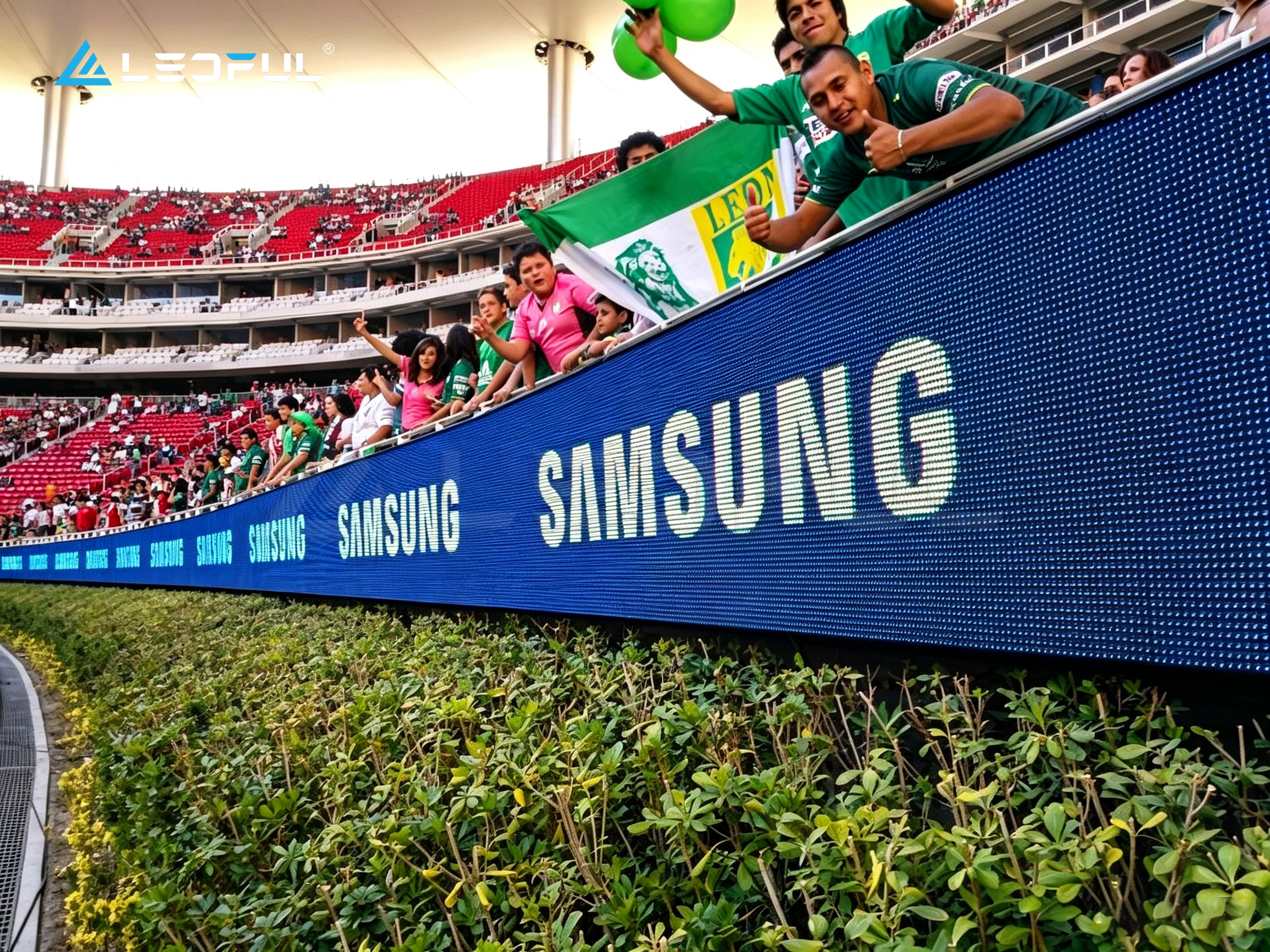
A stadium perimeter LED display is installed along the edge of a sports field and is commonly used for advertising, sponsor branding, event information, and live content.
Because players may run into the display area, safety becomes a critical requirement.
A professional perimeter LED display may use protective features such as:
- Soft LED masks
- Protective cushions
- Rounded edges
- Impact-resistant structures
- Adjustable installation angles
- Stable supporting structures
The exact design should be selected according to the sport, field layout, installation height, and applicable safety requirements.
For football, soccer, and other fast-moving sports, player protection should be considered before the display specification is finalized.
4. Can the Display Handle Rain, Dust and Outdoor Conditions?
Outdoor sports venues expose LED displays to changing weather conditions.
Rain, dust, humidity, temperature changes, and direct sunlight can all affect long-term performance.
For this reason, IP rating is an important specification.
IP Protection for Outdoor Stadium LED Screens
A suitable outdoor LED display may require protection against:
- Water
- Dust
- Moisture
- Temperature changes
- Outdoor exposure
Depending on the installation location, an IP65 or higher protection level may be considered.
However, the correct IP rating should be determined based on the actual installation environment rather than selected only because it has a higher number.
For example, a fully exposed outdoor screen may have different requirements from a display installed under a stadium roof.
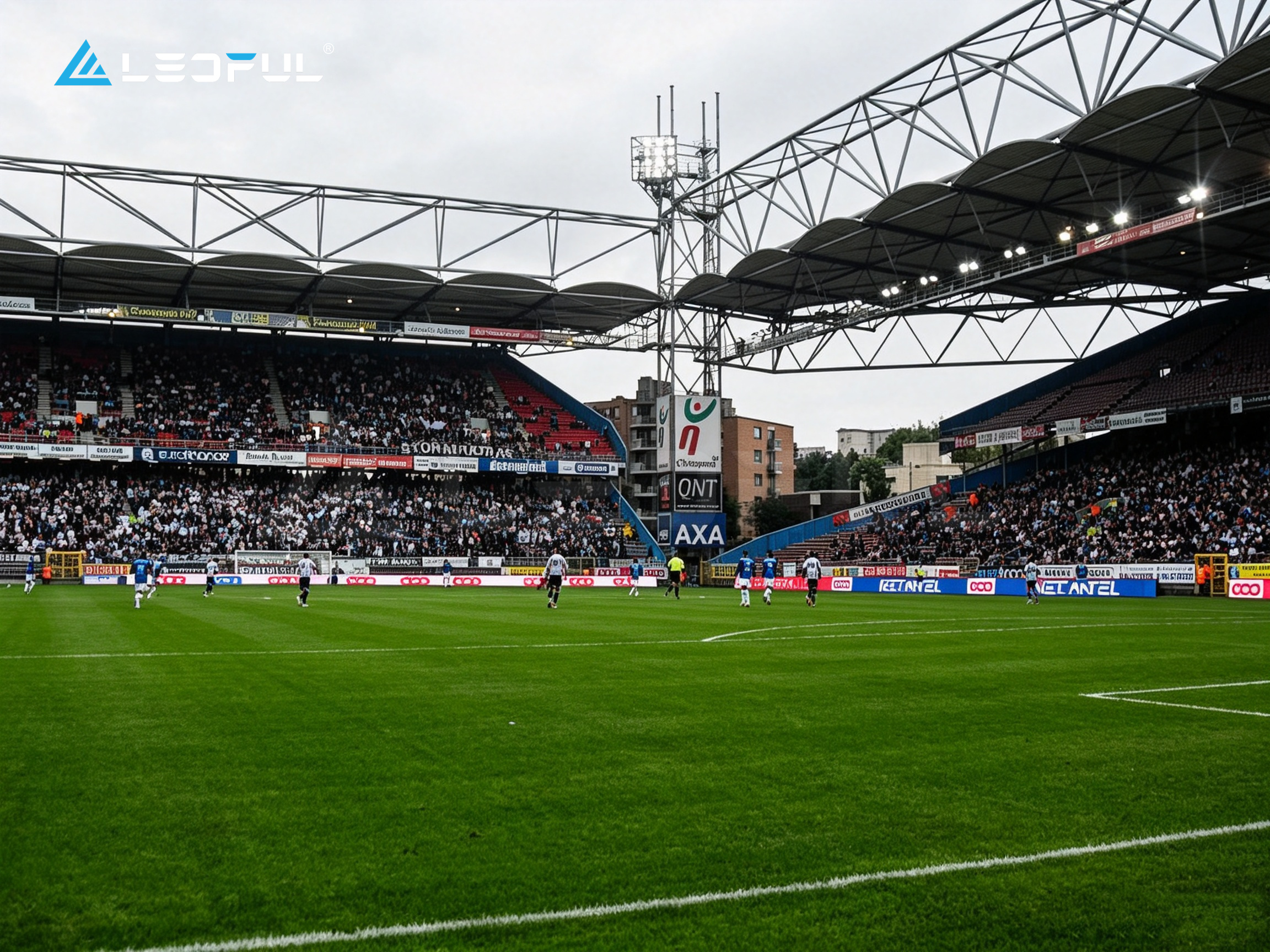
5. Can Every Spectator See the Content Clearly?
A stadium can have thousands or tens of thousands of spectators sitting at different distances and angles.
The LED display therefore needs to be designed around the audience—not simply around the available installation space.
Three important factors are:
Pixel Pitch + Viewing Distance + Screen Size
How to Choose Pixel Pitch for a Stadium LED Screen
Pixel pitch refers to the distance between individual LED pixels.
A smaller pixel pitch generally provides greater pixel density and can be beneficial when viewers are relatively close to the screen.
For large stadium displays viewed from a long distance, a larger pixel pitch may provide an appropriate balance between image quality and project cost.
| Viewing Environment | Pixel Pitch Consideration |
| Close Viewing | Fine Pixel Pitch |
| Standard Arena | Fine / Medium Pixel Pitch |
| Large Stadium | Medium Pixel Pitch |
| Long-Distance Viewing | Larger Pixel Pitch May Be Suitable |
There is no universal “best” pixel pitch.
The correct choice depends on the actual viewing distance, screen dimensions, content type, and project budget.
6. Can the Stadium LED Display Generate Advertising Revenue?
A stadium LED display is not only a visual communication tool.
It can also become a commercial asset.
Sports venues can use LED displays to show:
- Sponsor logos
- Brand advertisements
- Promotional videos
- Partner campaigns
- Event promotions
- Match information
- Ticketing information
For example, a perimeter LED system can continuously display rotating sponsor content during a match.
This creates an opportunity to turn unused visual space into a revenue-generating advertising platform.
Stadium LED Display as a Revenue Tool
A properly planned display network can support different advertising zones:
| Display Type | Main Commercial Application |
| Perimeter LED | Sponsor and advertising content |
| Main Video Screen | Brand campaigns and event content |
| LED Scoreboard | Sponsorship + match information |
| Ribbon LED | Continuous advertising |
| Concourse LED | Wayfinding and promotional content |
This is one reason stadium LED technology has become increasingly important for modern sports venue management.
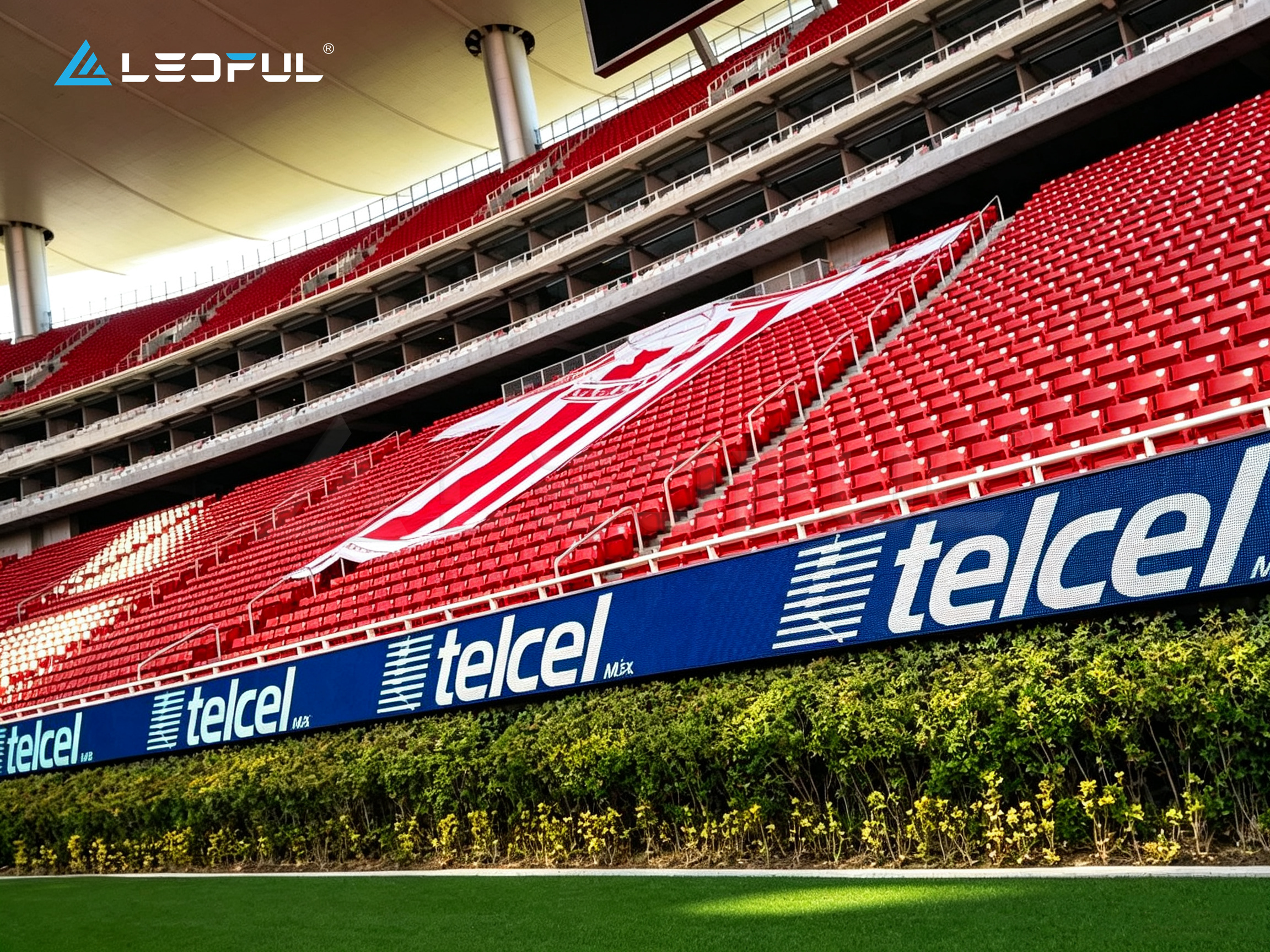
Types of Stadium LED Displays
Different locations require different LED solutions.
Stadium Perimeter LED Display
Perimeter LED displays are installed around the playing field.
They are commonly used for:
- Sponsor advertising
- Brand messages
- Live event graphics
- Promotional content
Player safety, impact protection, viewing angle, brightness, and refresh rate are especially important.
LED Scoreboard
An LED scoreboard can display:
- Scores
- Game time
- Player information
- Team information
- Statistics
- Advertisements
- Live video
Compared with traditional electronic scoreboards, LED technology provides greater flexibility for dynamic content.
Stadium Video Wall
A large central video wall can display:
- Live action
- Replays
- Player introductions
- Event graphics
- Advertisements
- Entertainment content
It can become the main visual focus of the venue.
Ribbon LED Display
Ribbon displays are often installed around the upper or lower levels of an arena or stadium.
They can provide continuous:
- Advertising
- Scores
- Announcements
- Sponsor branding
Because ribbon displays can cover long areas, consistent brightness and color performance are important.
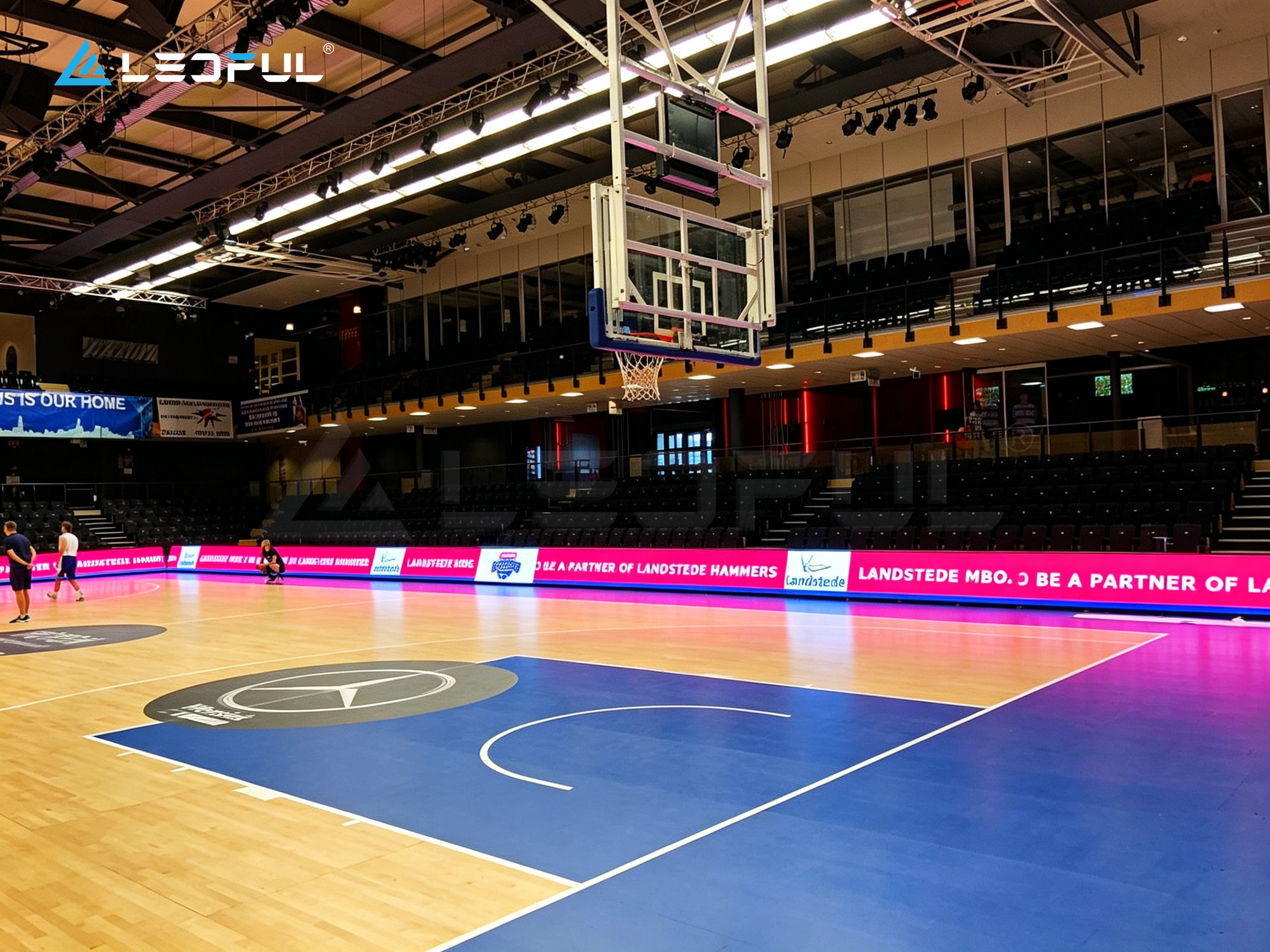
Center-Hung LED Display
Center-hung LED displays are commonly used in indoor arenas.
They can combine multiple LED screens into a central structure, providing spectators with different viewing angles.
This solution is particularly suitable for basketball arenas and other indoor sports venues.
Key Stadium LED Screen Specifications
Before purchasing a sports LED display, compare more than just the pixel pitch.
| Parameter | What to Consider |
| Pixel Pitch | Match viewing distance |
| Brightness | Suitable for ambient lighting |
| Refresh Rate | Important for camera and broadcast use |
| Grayscale | Important for smooth image reproduction |
| IP Rating | Match outdoor exposure |
| Viewing Angle | Important for large seating areas |
| Cabinet Design | Consider weight and installation |
| Maintenance | Front/rear service according to site |
| Safety | Important for perimeter applications |
| Control System | Support content and event management |
A professional supplier should recommend the configuration based on the complete project rather than one specification in isolation.
Stadium LED Screen Price: What Affects Cost?
The stadium LED screen price can vary significantly between projects.
The main factors include:
- Screen size
- Pixel pitch
- LED components
- Brightness
- Cabinet structure
- Protection rating
- Control system
- Installation structure
- Maintenance requirements
- Quantity
- Customization
A useful way to evaluate the project is:
Initial Investment + Installation + Maintenance + Energy + Downtime
Rather than comparing only the price per square meter, stadium operators should consider the expected operating life and total cost of ownership.
A lower initial price does not necessarily mean a lower long-term cost.
Stadium LED Display vs Traditional Scoreboard
Traditional scoreboards can still be suitable for simple score and time information.
However, LED displays provide greater content flexibility.
| Feature | Stadium LED Display | Traditional Scoreboard |
| Live Video | Yes | Limited |
| Advertising | Yes | Limited |
| Dynamic Graphics | Yes | Limited |
| Sponsor Content | Yes | Limited |
| Replays | Yes | No / Limited |
| Flexible Content | High | Lower |
| Large Video Playback | Yes | Limited |
For modern venues that want to combine sports information, entertainment, sponsorship, and live video, an LED-based solution provides greater flexibility.
How to Choose a Stadium LED Display Supplier
Choosing the right supplier is as important as choosing the display itself.
Before placing an order, ask:
1. Does the supplier understand sports applications?
A supplier should understand the difference between a normal outdoor LED screen and a stadium perimeter application.
2. Can the supplier recommend the right pixel pitch?
The recommendation should be based on viewing distance rather than simply pushing the highest-resolution product.
3. Can the display support broadcasting?
Ask about refresh rate, grayscale, calibration, and camera compatibility.
4. Is the display designed for outdoor conditions?
Check the IP rating, brightness, cooling system, and environmental specifications.
5. Can the system support advertising?
For commercial stadiums, content management and advertising flexibility are important.
6. What happens after installation?
Ask about:
- Warranty
- Spare parts
- Technical support
- Installation guidance
- Maintenance
- Remote troubleshooting
A stadium LED project is a long-term investment, so after-sales support matters as much as the initial quotation.
Why Choose LEDFUL for Stadium LED Display Projects?
A successful sports LED project requires more than supplying LED cabinets.
LEDFUL can support stadium and large-venue projects with solutions covering:
- Stadium LED display selection
- Pixel pitch recommendation
- Brightness configuration
- Perimeter LED display solutions
- LED scoreboard applications
- Control system configuration
- Installation guidance
- Maintenance planning
- Spare parts and technical support
With experience across 11,000+ projects in 116 countries, LEDFUL supports different LED display applications for commercial and large-scale venues.
For sports projects, the objective is not simply to install a large screen.
It is to create a display system that supports spectator experience, live broadcasting, player safety, sponsor exposure, and long-term venue operation.
FAQ: Stadium LED Screen
1. What is a stadium LED screen?
A stadium LED screen is a large-format LED display designed for sports venues and large public spaces. It can display live video, scores, advertisements, event information, replays, and promotional content.
2. What pixel pitch is best for a stadium LED display?
The appropriate pixel pitch depends primarily on viewing distance, screen size, content requirements, and budget. A professional project assessment should be completed before selecting the pixel pitch.
3. How bright should an outdoor stadium LED screen be?
Outdoor stadium displays generally require higher brightness than indoor displays. The correct brightness depends on direct sunlight exposure, screen orientation, installation height, and viewing conditions.
4. What refresh rate is needed for sports broadcasting?
A high refresh rate is recommended for camera-based applications. 3840Hz or higher may be appropriate for many professional applications, but the final specification should also consider the camera system and broadcast requirements.
5. What is a stadium perimeter LED display?
A perimeter LED display is an LED screen installed around the sports field. It is commonly used for advertising, sponsor branding, live content, and event information.
6. How much does a stadium LED screen cost?
There is no fixed price. Screen size, pixel pitch, brightness, protection rating, cabinet design, control system, installation, and quantity all affect the final cost.
7. Are stadium LED screens waterproof?
Outdoor stadium LED displays can be designed with appropriate IP protection against dust and water. The required protection level depends on the specific installation environment.
8. Can a stadium LED screen be used for advertising?
Yes. Stadium LED displays are widely used for sponsor logos, advertising campaigns, promotional videos, and event branding.
9. What is the difference between an LED scoreboard and a stadium video screen?
An LED scoreboard is primarily designed to display scores, statistics, and game information, while a stadium video screen can support full-motion video, live feeds, replays, advertisements, and entertainment content.
10. How can stadium LED screens protect players?
Perimeter LED systems can incorporate protective cushions, soft masks, rounded edges, impact-resistant structures, and suitable installation angles. The exact safety design should be matched to the sport and venue.
Planning a Stadium LED Screen Project?
Don’t start with:
“How much does a stadium LED screen cost?”
Start with:
“What does the venue need the LED system to achieve?”
If the project requires stadium LED display, sports LED screen, perimeter LED display, LED scoreboard, or a complete large-venue solution, LEDFUL can evaluate the application based on the actual venue conditions.
Send LEDFUL Your Project Details
① Venue Type
② Screen Location
③ Screen Size
④ Viewing Distance
⑤ Indoor / Outdoor Environment
⑥ Live Broadcast Requirements
⑦ Target Budget
LEDFUL can then recommend the appropriate pixel pitch, brightness, refresh rate, IP protection, cabinet configuration, control system, and installation approach.
Get Your Stadium LED Display Solution
Website: www.ledful.com
Planning a stadium, arena, or large sports venue? Send us your project requirements and build the right LED display solution from the start.